


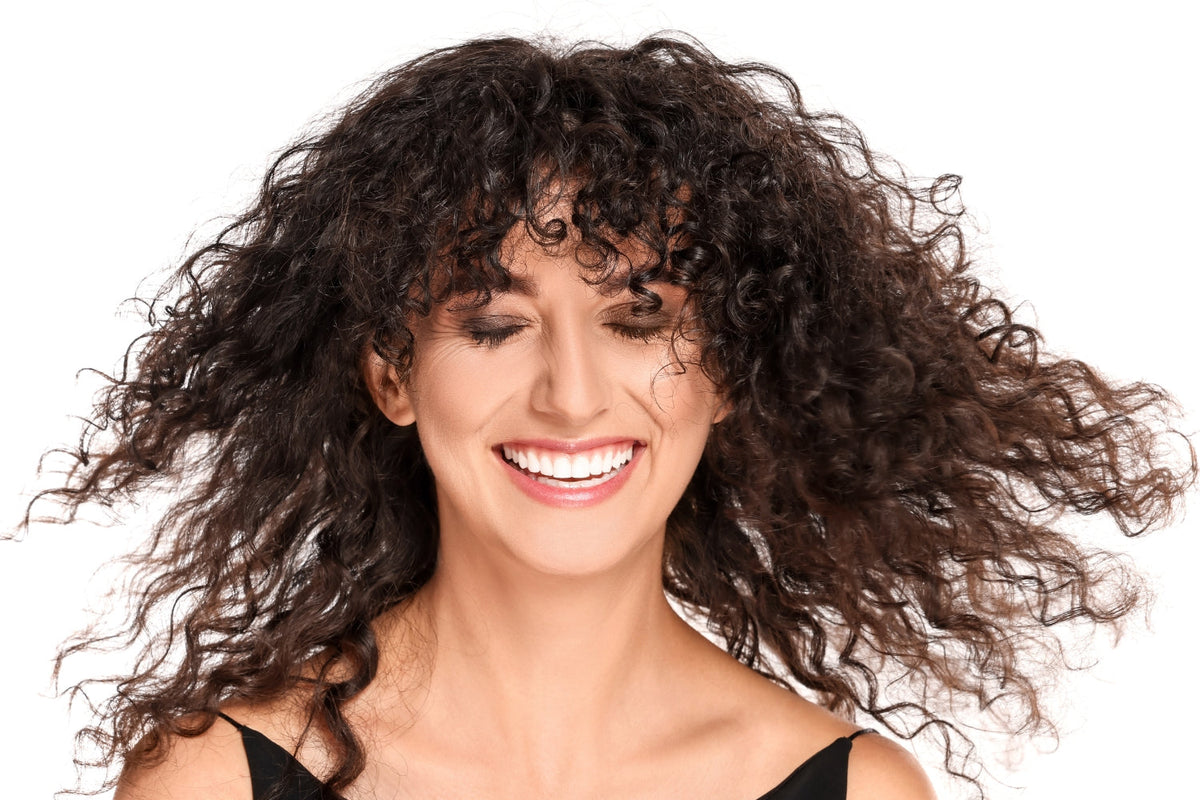
Multiple Curl Patterns
Do you have multiple curl patterns?
Having multiple curl patterns throughout your hair is more common than you might think! You may notice that some sections form loose waves while others create tighter curls. This variation is completely normal and can make finding the right hair care routine a little more challenging, but totally do-able.
Different curl patterns can have different needs when it comes to moisture, styling products, and techniques. For example, looser curls may become weighed down by heavy products, while tighter coils may need more moisture to help maintain softness and definition.
Here's the best way to manage your hair if you have multiple curl patterns:
Identify Your Curl Patterns

The first step is understanding the different curl patterns throughout your hair. Curl patterns are generally categorized into three main groups:
Type 2A–2C: Wavy hair ranging from loose, subtle waves to more defined S-shaped patterns.
Type 3A–3C: Curly hair with defined spirals and ringlets, ranging from loose curls to tighter corkscrew shapes.
Type 4A–4C: Coily hair featuring tight coils, zigzag patterns, or densely packed kinks.
Your curl pattern can be influenced by several factors, including genetics, hair damage, and styling habits. Heat styling, chemical treatments, and general wear and tear can sometimes affect how well your curls form.
It's also important to remember that curl pattern is only one part of understanding your hair. Hair porosity, which describes how your hair absorbs and retains moisture, and hair texture, which refers to the thickness of individual strands, can also influence how your hair responds to products.
The best way to identify your complete curl types is by understanding the porosity of your hair and the texture of your hair. Remember, it might vary by section and that's totally normal!
Tailor Your Routine by Section

Once you have a better understanding of the different curl types you have, you can figure out the best way to care for each section. You can do this with either your products or with your styling techniques. Small changes to your product application and styling techniques can make a noticeable difference!
Product Selection
Different sections of your hair may respond better to different product consistencies. Looser waves and curls can sometimes become weighed down by heavy creams, butters, or oils. A lightweight leave-in conditioner or styling product may provide enough moisture and definition without sacrificing volume.
Tighter curls and coils may benefit from richer conditioners or styling creams that help improve softness, manageability, and moisture retention. However, your hair's porosity and strand thickness also matter, so avoid assuming that every section with a tighter curl pattern needs the heaviest products.
You can also experiment with applying different amounts of the same product to different sections. For example, try using a smaller amount of styling cream on your looser curls and a little more on sections that tend to feel dry or need extra definition.
Pay attention to how your hair feels after styling and between wash days. If a section feels greasy, limp, or coated, you may be using too much product. If it feels rough, dry, or difficult to detangle, it may need more conditioning or a different product combination.
Hair Styling
Your styling technique can also influence how your different curl patterns look. Rather than trying to force every section into the same shape, experiment with techniques that enhance each section's natural pattern.
Finger coiling can help encourage curl formation and definition in sections that struggle to form consistent spirals. Raking products through the hair with your fingers can help distribute styling products evenly, while scrunching encourages waves and curls to form. For sections that need more definition, you can also try smaller styling sections or gently shaping individual curls.
If your tighter curls shrink significantly while your looser sections remain elongated, you may notice differences in the overall shape of your hairstyle. This is a natural characteristic of textured hair. You can experiment with stretching techniques, such as braid-outs or twist-outs, to help create a more uniform appearance without needing to alter your natural curl pattern permanently.
PRO TIP: Twist-outs and braid-outs can be helpful because they allow you to blend different curl types into a more uniform texture.

Final Thoughts
Having multiple curl patterns doesn't mean you need to struggle with your hair or maintain an overly complicated routine. Understanding the differences between your curls can help you make more informed choices about the products and techniques you use.
Most importantly, remember that your curls will not all behave the same, and that’s perfectly okay! Embracing the natural variation in your curl pattern can make the process of managing it more enjoyable. Working with your curls, instead of trying to make them uniform, can lead to healthier, more defined hair overall.
Disclaimer: The information contained in this article is provided for informational purposes only and is not intended to be used to diagnose or treat any health conditions. Medical advice should always come from your physician or a trained professional.
interested in reading more?
continue exploring
While curly hair grows at the same rate as other hair types, several factors can impact its length retention and overall health. Here are common hair growth concerns and ways to address them.
Read more
People with curly hair often face unique scalp concerns due to the structure and texture of their hair. Here are some common scalp concerns and suggested solutions.
Read more
